
PGN Features
FEATURE: Local Author’s ‘The Open’ Celebrates Golf’s Stormy, Scottish Origins

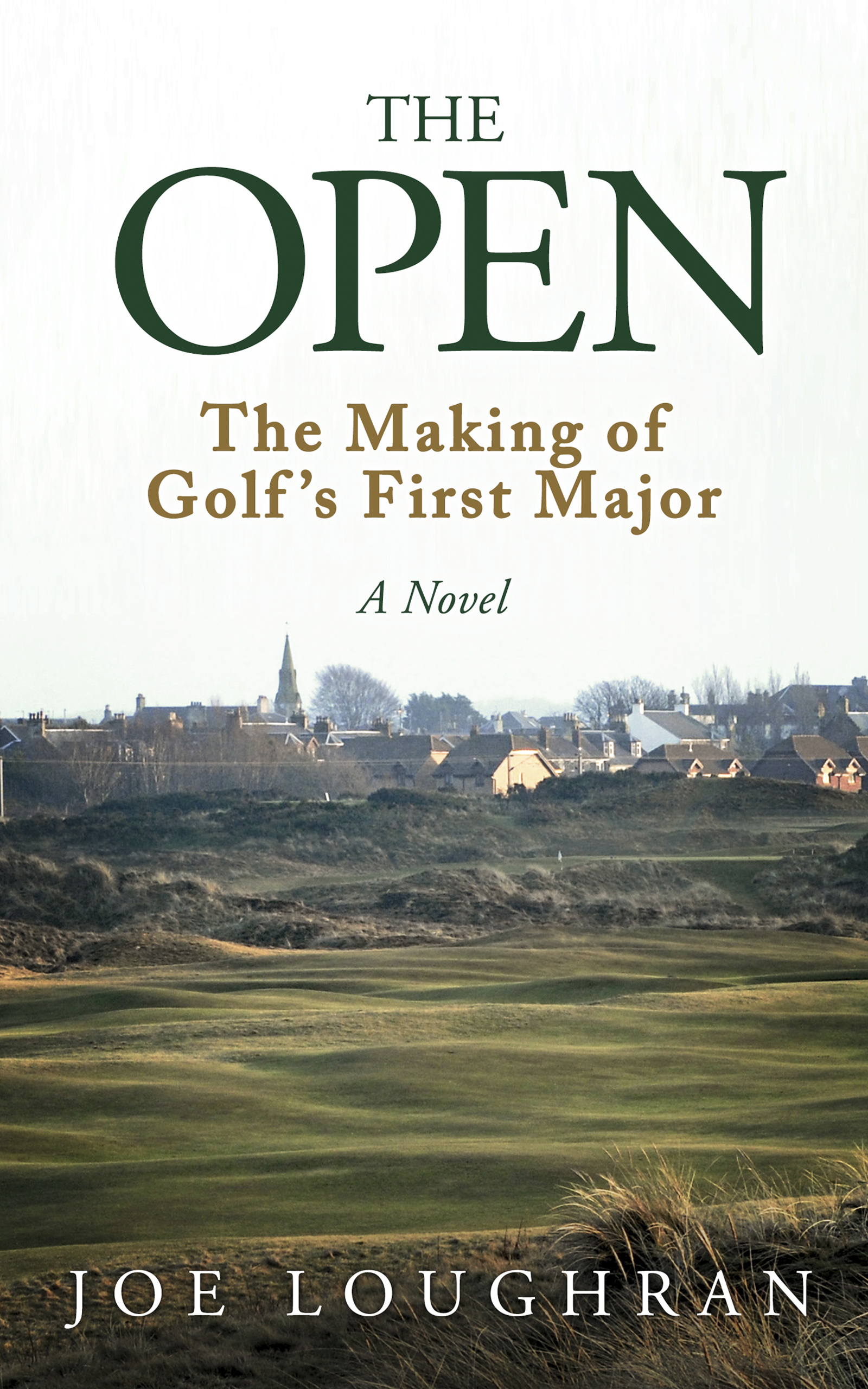
Summer is typically the season for celebrating the global nature of sport, but 2026 has taken it up a notch.
As a sprawling World Cup welcomed the world’s soccer fans to North America, followers of individual sport have been treated to the yearly European midsummer smorgasbord of Wimbledon, the Tour de France and a links golf season anchored by the men’s Open Championship.
But among all these big-league offerings, nothing can match the history of the Open. (I’ll also note, as covered last year, there’s a direct through-line connecting Scotland’s golf tradition and the game’s roots in Western Pennsylvania.)
Local author, businessman and golf enthusiast Joe Loughran has long felt himself compelled by such history, which superficially dates back to 1860 with the first playing of the Open at Prestwick Golf Club, but in actuality originates with Saint Andrew.
As in, the real Saint Andrew, not the eponymous town … or the university … or the golf course.
It’s that connection, from the sport as we know it now to real-world matters like power, politics, religion and evangelism, that Loughran explores in his historical novel ‘The Open: The Making of Golf’s First Major,’ now available through the author’s imprint Back9Books.
“I have a passion for golf history,” said Loughran, a retired FedEx executive who lives in Pine Township and is a 30-plus-year member at Oakmont Country Club.
“I wouldn’t say I’m a golf historian, per se, but I try to find the relevance of the history and tell the story.”
Loughran’s tale winds from the fourth century A.D. all the way through the 1800s, following the toils and exploits of figures as wide-ranging as Saint Regulus — who toted the literal bones of Saint Andrew from Greece to proto-Scotland — and Mary, Queen of Scots, all the way to famed early golf heroes Old and Young Tom Morris.
But Loughran applies his prodigious imagination to further attach the reader to these characters and moments that might otherwise seem abstract. Via the fictional characters Loughran weaves into the narrative, the modern golf fan can more easily relate to the action.
Loughran has explored the techniques of historical fiction previously in a handful of previous novels, a hybrid approach he fell in love with while admiring the works of English novelist Edward Rutherfurd.
“Reading those stories allowed me to dream,” Loughran said. “I always enjoyed reading and those Rutherfurd books taught me about history through the travails of his characters.”
Loughran decided to give the origins of golf the historical fiction treatment after discussing the greats of the game one day with current Oakmont head professional Devin Gee. In short, Loughran sensed that the average 21st century golfer has little sense of the historical weight of the sport, so he hoped writing ‘The Open’ could help rectify that.
Following 3 1/2 years of research, writing and editing, Loughran had officially combined two of his great passions in life.
“That was the impetus behind the book,” he said. “Because of the great demand for golf content out there, you have to be very particular about the research. It’s important to be factual.”
Here’s one example of commonly-spread misinformation Loughran provided during a lively conversation on his book: The aforementioned Young Tom Morris was actually named after a deceased older brother, not his father. The figure referred to many places as Tom Morris, Jr., wasn’t really a Junior at all.
That tidbit — like many other historical details in ‘The Open’ — was the product of a personal trip Loughran and his wife took to Scotland. There he met with the director of the R&A museum, viewed the 1744 rules of golf and the Open Championship scorecard from 1860, and even secured a digital copy of the course modifications to St Andrews over the years.
A trip to Prestwick itself capped the pilgrimage. The host of the Open 24 times, but not since 1925, ancient Prestwick made a particular impression on Loughran, and that’s where his novel reaches its crescendo with the first battle for the Champion Belt.
“You can feel how passionate the people of Prestwick are about their club,” he said. “(The visit) gave me an appreciation for what I wrote, and a feeling that it was accurate.”
Informed by Loughran’s trip across the Atlantic, collector’s editions of ‘The Open’ include faithful replicas of the original rules of golf and the first Open scorecard, the latter of which enumerates the 12 holes of Prestwick’s mid-1800s layout.
Little touches like those emphasize the care that went into this project, which should provide a necessary reminder that, although golf has grown to great heights of polished popularity in the United States and elsewhere, the sport’s origins lie in the very messy, very human dramas of the British Isles.
“It’s the first golfing society in the world,” Loughran said, “and you can’t write a book about the birth of golf without writing about the evolution and turmoil of life in Scotland itself.”


